Lou Lebentz · Creator of The Voyage®

White Paper - 2026

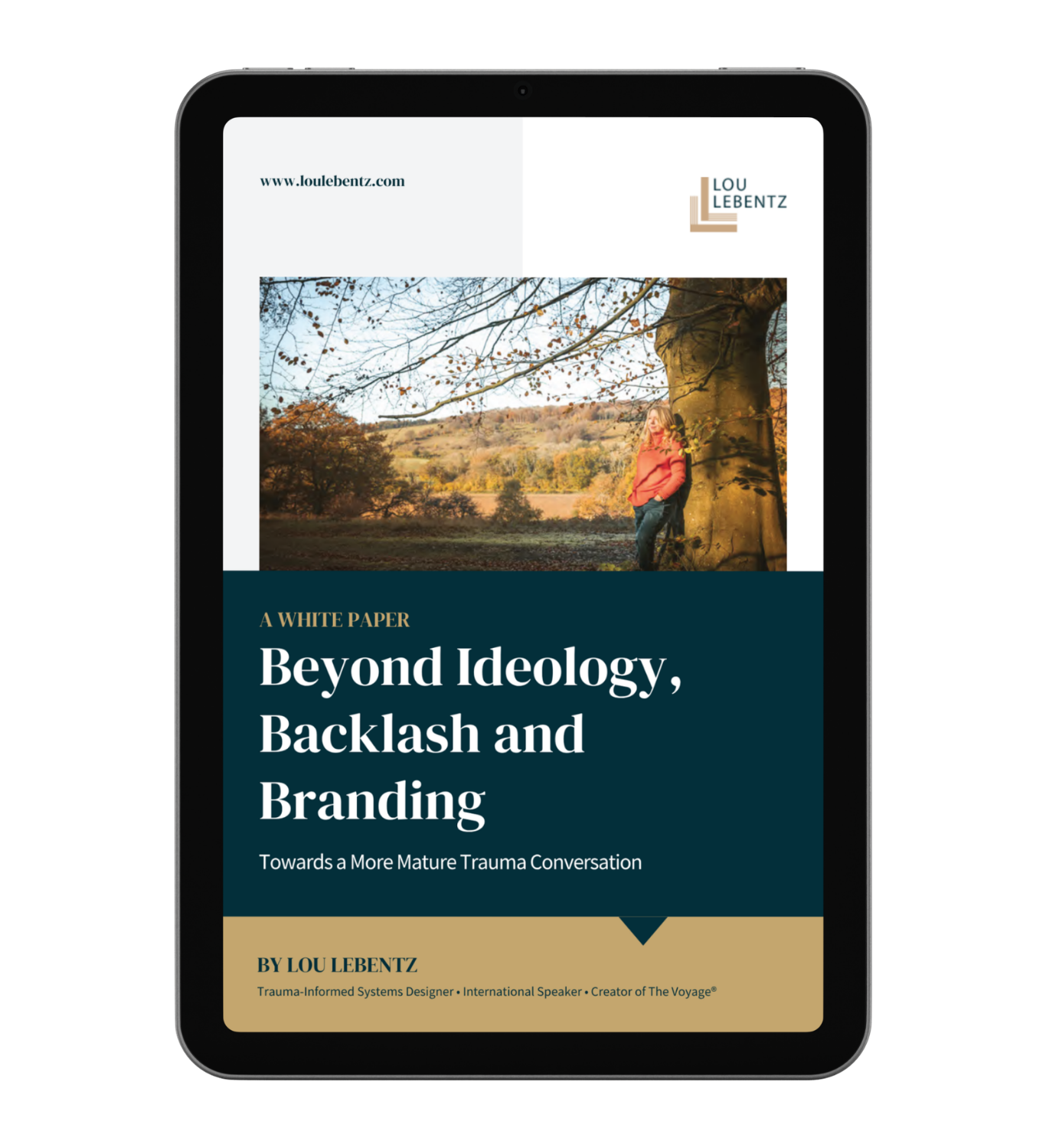
Beyond Ideology, Backlash and Branding

Towards a more mature trauma conversation.

By Lou Lebentz Trauma-Informed Systems Designer · International Speaker · Creator of The Voyage®

“The maps we hold about human beings shape the worlds we build around them.” -Lou Lebentz

Read the full white paper

The complete piece - nine parts, an executive summary and a closing reflection. Yours to read, keep and share.

No sign-up

No email required

Free

Word document · approx. 20 min read

In Brief

Trauma itself is not the problem. The conversation around it is.

Over the past decade, the language of trauma has moved out of clinical settings and into mainstream life – into leadership, education, parenting and social media. For many people, this has been profoundly humanising. For others, it has begun to feel overused, commercialised and difficult to question.

This paper argues that the real difficulty is that the public conversation around trauma has become fragmented and emotionally charged – simultaneously needed, distorted, commercialised, politicised and misunderstood. Trauma, in short, has developed a public relations problem.

The way forward is not to choose a side. It is to mature the conversation: to hold compassion and accountability, context and responsibility, evidence and humility – without collapsing into either idealisation or backlash.

Complexity requires maturity. Context is not absolution. Compassion and accountability can coexist.

The argument, in three lines

Trauma has a PR problem

Not because trauma is unimportant – but because the language around it has become overused and misunderstood

Complexity requires maturity

Holding two truths at once is psychologically demanding. Certainty is easier. It is rarely truer.

Context is not absolution

Understanding why a behaviour developed is not the same as excusing its consequences.

Compassion and accountability

They are not opposites. The absence of compassion often reduces genuine accountability.

Informed, not branded

The essential distinction between trauma-informed practice and trauma as identity, aesthetic or market position.

The discomfort of money

A reflective look at suffering, sustainability and society’s uneasy relationship with paying for care.

A more mature future

Psychologically literate, nuanced and relationally aware systems – beyond both ideology and backlash.

Contents

In Brief

Executive Summary

Part One

Why This Conversation Matters Now

Part Two

Why Trauma Became Mainstream

Part Three

Trauma Has a PR Problem

Part Four

The Discomfort of Money

Part Five

Context Is Not Absolution

Part Six

Trauma-Informed Versus
Trauma-Branded

Part Seven

Why Humans Resist Complexity

Part Eight

Towards a More Mature Trauma Conversation

Conclusion

A Quieter, Wiser Way Forward

In Brief

Executive Summary

Part One

Why This Conversation Matters Now​

Part Two

Why Trauma Became Mainstream

Part Three​

Trauma Has a PR Problem

Part Four

The Discomfort of Money

Part Five

Context Is Not Absolution

Part Six

Trauma-Informed Versus Trauma-Branded

Part Seven

Why Humans Resist Complexity

Part Eight

Towards a More Mature Trauma Conversation

Conclusion

A Quieter, Wiser Way Forward

Who It’s For

Written for people who think carefully about human behaviour

Clinicians and therapists

Leaders and executives

Educators

Coaches

HR and people teams

Healthcare professionals

Policy and systems thinkers

Psychologically curious readers

Who It’s For

Written for people who think carefully about human behaviour

Clinicians and therapists

Leaders and executives

Educators

Coaches

HR and people teams

Healthcare professionals

Policy and systems thinkers

Psychologically curious readers

About the Author

Lou Lebentz

Trauma-Informed Systems Designer · International Speaker · Creator of The Voyage®

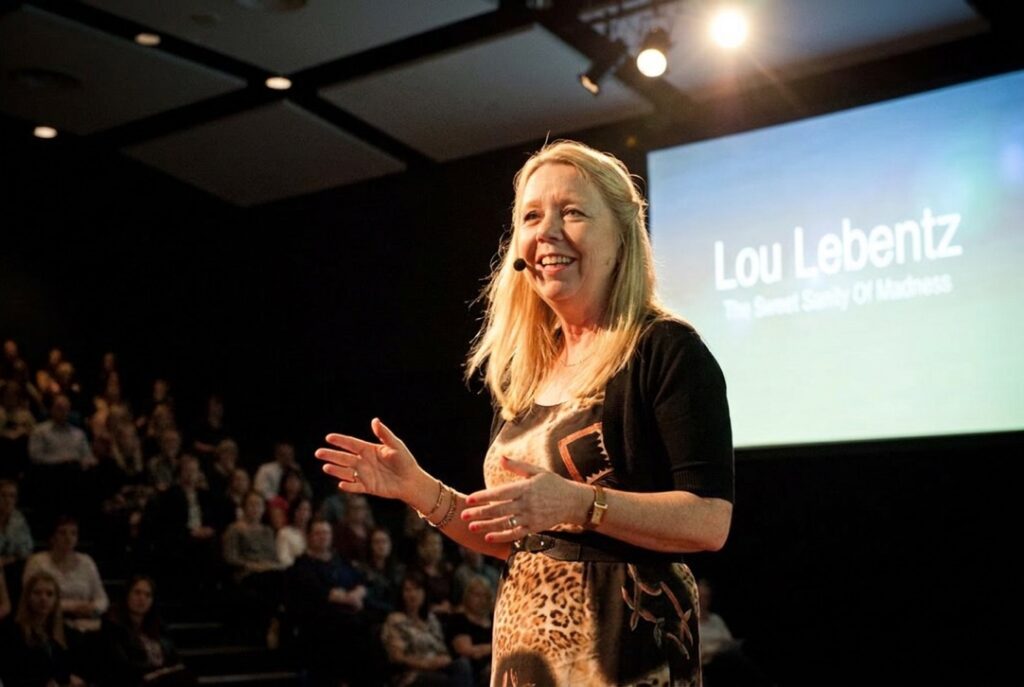
Lou Lebentz is a trauma-informed systems thinker, international speaker and the creator of The Voyage®. Her work focuses on helping individuals, professionals, leaders and organisations understand the relationship between trauma, nervous systems, human behaviour and relational health.

Through frameworks including The Voyage®, The 4P Protocol™ and Return on Regulation™, she explores how more psychologically literate and emotionally regulated systems may create healthier cultures, workplaces and communities.

“What becomes possible when human beings are understood with greater depth, context and humanity?”

Take the full paper with you

The complete white paper – free to read, free to share. No form, no sign-up, no email.

Word document · approx. 20 min read