
Over the past year, there has been a noticeable rise in conversations positioning GLP-1 medications as a potential breakthrough in the treatment of addiction. For some, this has brought genuine hope. For others, relief. And for some people, very real changes in cravings and compulsive behaviours.
I want to be clear from the outset. I am not anti-medication. I am not anti-science. And I am not dismissing the very real experiences of people who are finding benefit from these drugs.
What I am concerned about is something more subtle.
It is the speed with which the narrative is hardening into certainty.
It is the creeping language of “miracle cure.”
And it is what tends to happen to human beings when complexity is flattened into a single solution.

Addiction has always been a field hungry for answers. Understandably so. The suffering is immense. The stakes are high. And the history is littered with failed promises, moral judgements, and oversimplified explanations.
We have moved through many dominant stories over the decades.
Addiction as moral failing.
Addiction as disease.
Addiction as a willpower problem.
Addiction as brain chemistry alone.
Each story has offered partial truth. None has been the whole truth.
When something new appears that genuinely helps some people, there is a collective exhale. Finally. Relief. Progress. And that matters.
But trauma work teaches us to be cautious of certainty, especially when it arrives wrapped in hope.
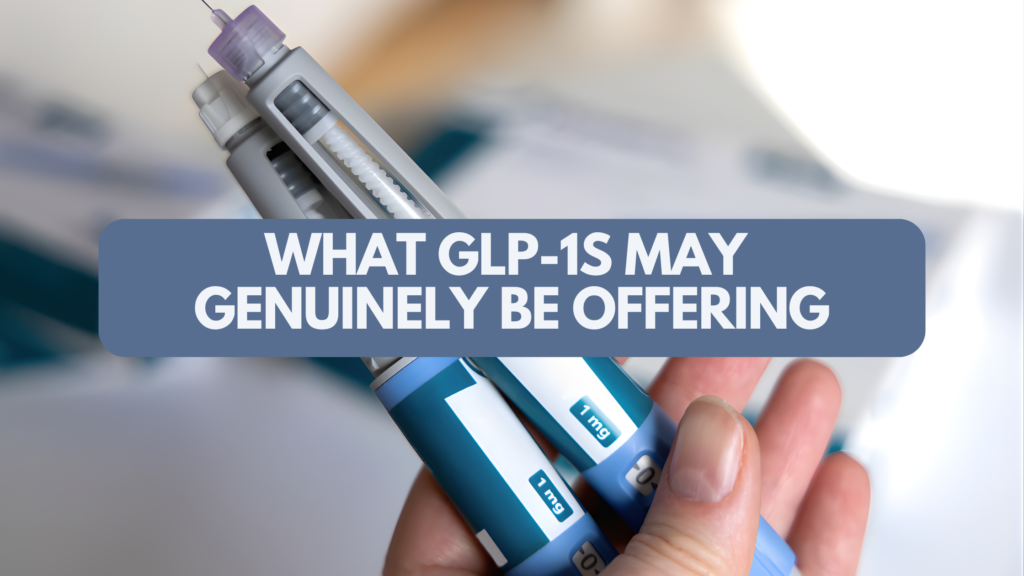
Early evidence and lived experience suggest that GLP-1 medications may reduce appetite, craving, impulsivity, and reward-seeking behaviours. For some people, this can create space. Less noise. Less compulsion. A quieting of the constant internal pull.
That is not insignificant.
For some, this may function as stabilisation or harm reduction. It may lower risk. It may interrupt patterns that previously felt unmanageable. It may give people breathing room they have never had before.
I can hold all of that as true.
And still say this.
From a trauma-informed lens, addiction is not primarily a problem of appetite, dopamine, or poor decision-making. It is a solution the nervous system has found.
Addiction is often about regulation.
About soothing an overwhelmed system.
About managing unbearable internal states.
About attachment wounds, grief, fear, shame, and unmet needs.
When we reduce addiction to a behaviour without staying curious about what that behaviour has been protecting the person from, we risk repeating an old mistake.
The nervous system adapts. If one outlet is closed without safety being built elsewhere, the system looks for another way to cope. Sometimes that shows up as relapse. Sometimes as depression, anxiety, eating disorders, compulsive work, dissociation, or a deep sense of emptiness that no one warned them about.
When people are told they are “fixed” and then discover they are not, shame tends to rush in to fill the gap.

This is the part that concerns me most.
Miracle language feels hopeful, but it often leaves people unprotected. When expectations are inflated and reality later disappoints, the failure is usually internalised.
“I thought this was supposed to work.”
“What’s wrong with me?”
“Why am I still struggling?”
I have sat with too many people holding that quiet devastation.
Trauma-informed practice is, at its core, about protecting people from unnecessary shame. That includes being careful with how we talk about new treatments, especially in a field with such a long history of over-promising.
Biology and biography belong together
We do not need to choose between biology and trauma.
Between medication and meaning.
Between neurochemistry and nervous system safety.
GLP-1s may become one tool among many. For some people, they may be genuinely supportive. For others, they may not. And for many, they will not address the deeper relational and emotional wounds that sit beneath addictive patterns.
Addiction does not occur in a vacuum. It happens in bodies shaped by experience, attachment, environment, inequality, and history. No molecule can replace safety, connection, or repair.

I am not asking us to abandon medication.
I am asking us to slow down our certainty.
I am asking us to stay humble.
To be careful with language.
To hold the people who will not be helped by this, or who will be helped only partially.
Most of all, I am asking that we do not forget the human nervous system in our excitement about neurobiology.
Progress does not have to come at the cost of depth.
If we can hold medication as support rather than solution, and trauma-informed care as essential rather than optional, we stand a far better chance of helping people not just stop a behaviour, but actually heal.
And that, surely, is the point.