
By Lou Lebentz
You were the one who didn’t rock the boat.
You were the helper, the peacekeeper, the one who smiled even when your heart was breaking.
You were ‘the easy child’. The one who didn’t need much.
But you did need something – and it never came.
This is for the ones who coped.
The ones who stepped aside.
The ones who learned – consciously or unconsciously – that there wasn’t space for them.
There’s a term for this experience.
They call it being a glass child.
Not because you were fragile.
But because people saw through you.
You became invisible in the shadow of a sibling with louder or more urgent needs.
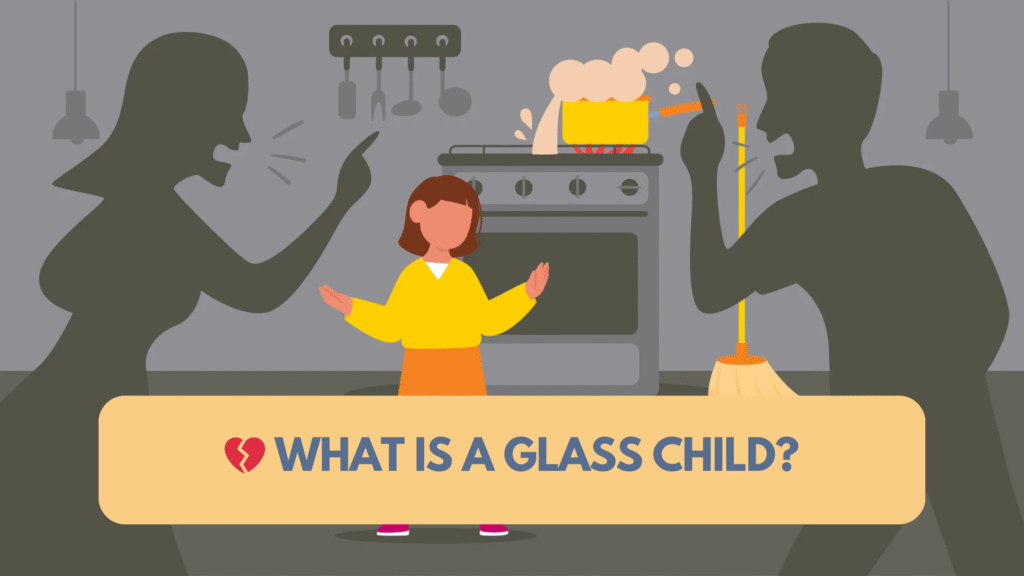
Glass children grow up alongside a brother or sister with a serious illness, addiction, disability, or complex mental health needs. While the family focuses on the child in crisis, the glass child becomes the “okay one” – often praised for being so resilient, so mature, so independent.
But inside?
They’re quietly crumbling.
Glass children often:
Swallow their feelings to avoid adding to the stress.
Become parentified, taking on adult roles far too soon.
Stop expressing needs, because it feels selfish.
Achieve and achieve… and still feel unseen.
They don’t learn to ask for help, they learn to disappear.

Fast-forward a few decades, and many glass children are now grown-ups walking around with chronic guilt, burnout, and an internal story that says:
“I don’t matter as much.”
“Other people’s pain is more important than mine.”
“If I need something, I’m being a burden.”
Some become therapists, carers, or coaches, roles that echo the early identity of being the helper. Others find themselves stuck in relationships where their needs are ignored, because it’s so familiar.
The trauma isn’t always in what happened.
Sometimes, it’s in what didn’t happen.
The holding that never came.
The attunement that never arrived.
The spotlight that never once turned your way.

One of the most heartbreaking things I witness in my work is when someone says:
“I don’t think I had trauma. My sibling was the one who struggled. I was fine.”
But fine isn’t the same as fulfilled.
Fine isn’t the same as felt.
Fine is often just functional. A performance. A mask.
The truth is, many glass children carry a deep grief.
Not just for the childhood they had, but for the self they lost in the process of making space for everyone else.
The Voyage® offers a different path.
One where your needs don’t make you needy.
Where your truth gets airtime.
Where your healing matters, not just because of what you’ve lived through, but because of who you are beneath it all
I hope to have the Voyage for the general public one day available and if so, I hope to see you there.
Lou xx