
There’s a growing sense of tension in the world, a feeling that we’re more divided than ever. Extreme wealth and power seem to be concentrated in the hands of a few, while the remainder feel as if they are left to fight for the scraps. There are leaders who promise safety and prosperity, but behind their words, people are noticing a different reality: a world where fear and scarcity are used more frequently than ever, as tools of control.
But this post isn’t just about politics. It’s about something deeper, something that runs through the nervous system of our societies like a silent current: trauma.

The Age of Fear and Division
Every time I turn on the news, I can see it, a constant sense of threat, of people coming from a place of “us versus them.” Politicians and others speaking of protecting their own, of shutting out the outsider, of clawing back what is “rightfully theirs.” But what they’re really doing underneath it all, even if their unconscious of it, is stoking more fear.
Fear is a powerful tool. It primes the nervous system for survival. It makes humans suspicious of one another. It drives people into defensive, reactive states where empathy and compassion become luxuries they can’t afford. And when fear is the currency, those who promise strength, no matter how ruthless, or self-righteous- often rise to power.
This is why we see so many authoritarian leaders on the rise, those who thrive on division, on “othering,” on convincing people that their suffering is someone else’s fault. It’s the perfect tactic in a world shaped by scarcity.

Scarcity:
A Manufactured Reality
When society is convinced that there isn’t enough to go around. Not enough housing, not enough healthcare, not enough good jobs, anger escalates. But the real truth is, there is enough, but it’s hoarded at the top. The world’s wealth is concentrated in the hands of a tiny fraction, while the rest are pitted against each other trying to grab for even the basics of life.
When people are made to feel that there isn’t enough, they become afraid. And that fear is weaponised. It turns them inward, makes them tribal. “If I can’t get a doctor’s appointment, why should they?” “If I’m struggling, why should they have more?” it’s understandable on so many levels.
But this issue of scarcity isn’t just a political problem, it’s a trauma problem. Because trauma is, at its core, an experience of disconnection, disconnection from safety, from trust, from a sense of worth. And when a society is driven by scarcity, it is driven by collective trauma
It’s no coincidence that so many of today’s leaders display traits of narcissism or sociopathy. In a world gripped by fear, those who promise strength, certainty, and protection become saviours. But what they offer isn’t true safety, it’s control.
True leadership isn’t about domination. It’s about creating a an even greater sense of safety amidst the storms, of connection, of belonging. It’s about having the courage to be compassionate, even when it’s easier to divide.
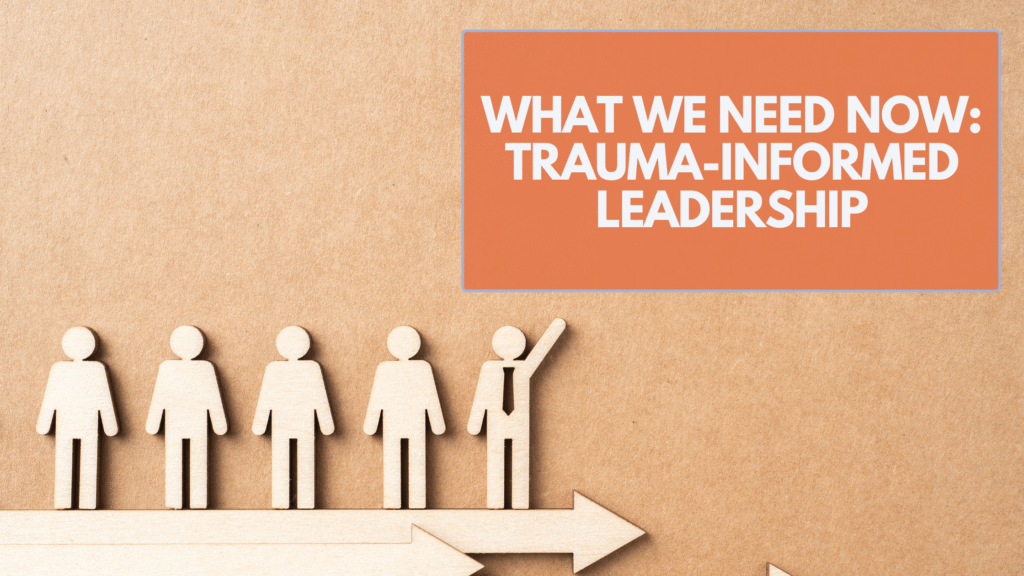
The answer is never more fear, more division, or more control. It’s not even about tearing down the wealthy or the powerful. It’s about understanding the root of the problem: trauma. Because trauma makes us defensive. Trauma makes us fearful. Trauma makes us grasp for power or shrink in shame.
BUT HEALING IS POSSIBLE
We need leaders who understand this. Leaders who don’t just manipulate fear but who help people transform it. Leaders who can look beyond tribalism and scarcity and recognise that we are all interconnected. Leaders who aren’t afraid to be vulnerable, to be honest, to be human.
If you’re reading this and feeling that same sense of fear, anger, or despair, I want you to know that it doesn’t have to be this way. We can heal. We can build a different world, but it starts with how we see ourselves and each other.
This is why I teach trauma-informed care, not just because it helps individuals heal, but because it helps us heal as a society. It helps us see the humanity in each other again. It helps us recognise that we are not enemies, but fellow travellers – all in it together.
This isn’t about politics, it’s about people and it’s about our survival. And our capacity to be something far more than we are right now. It’s about our humanity and healing. Thanks for reading and if you feel called to lead from a place of truth, care and compassion please check out my Voyage for Leaders programme.